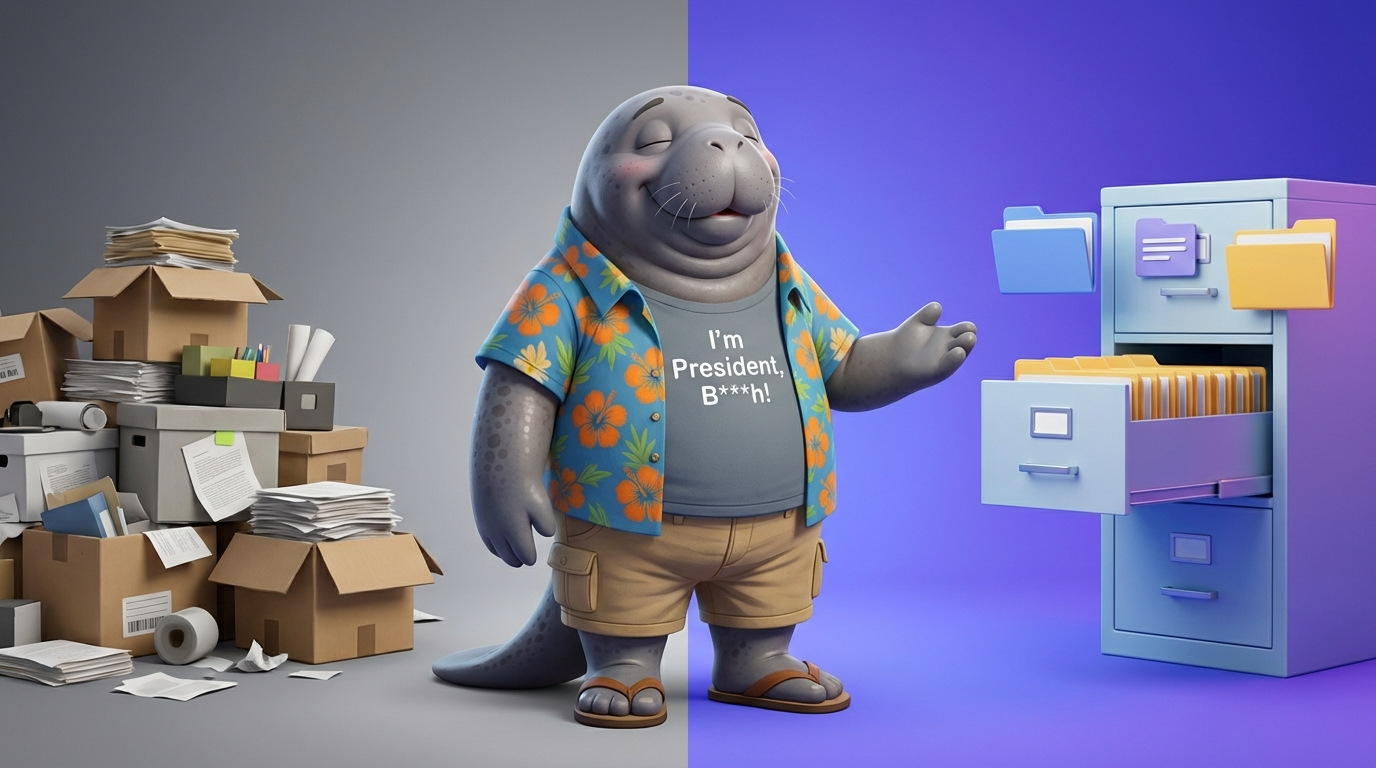
Florida COA Document Retention: What to Keep and For How Long
Florida COA document retention requirements explained. Learn what to keep, how long, and how to respond to owner record requests within 10 days.
Why You Can’t Ignore This
Florida law gives owners 10 business days to receive official records after they request them. That’s not 10 days to start looking. That’s 10 days to deliver. If you miss the deadline, the penalty is $50 per day for up to 10 days—up to $500 in statutory minimum damages under Florida law (FS 718.111(12)(c)).
Most boards discover this the hard way.
What You Must Keep Forever
Your governing documents never expire. Original Declaration of Condominium, Articles of Incorporation, Bylaws, and every amendment to those documents stays in your files permanently. Same with original construction documents, as-built plans, surveys, legal descriptions, and easement agreements. Warranty information for major systems (HVAC, elevators, roofs) belongs in this category too.
Annual financial statements, audited financials, tax returns, and records of major capital improvements also stay forever. You might think 40-year-old tax returns serve no purpose. You’re wrong. The IRS doesn’t forget, and neither do lawyers.
Seven Years for Financial Documents
Annual budgets, monthly financial statements, bank statements, accounts receivable and payable, invoices, receipts, contracts, leases, and insurance policies all require seven-year retention. The clock starts when the contract terminates or the policy expires, not when you sign it.
Special assessments, payment histories, and collection correspondence fall into this category. If you collected a special assessment in 2018, you keep those records until 2025.
Five Years for Meeting Records
Board meeting minutes, member meeting minutes, committee minutes, written consents, resolutions, election ballots, and proxies require five years. Significant board correspondence, legal correspondence, and compliance notices also get five years.
This is where most Century Village boards fail. Buildings from the 1970s have 50 years of meeting minutes stored in cardboard boxes, filed inconsistently, and scattered across board members’ homes. When someone requests the minutes from a 1998 meeting about a roofing dispute, you’ve got 10 days to find them. Good luck.
Four Years for Contracts
Service contracts, vendor agreements, and employee records (if applicable) require four years of retention after completion. Not four years from signing. Four years from when the work ends.
Until Resolution for Active Matters
Pending litigation files stay until seven years after final resolution. Open insurance claims, active violations, disputes, and current contracts remain in your files until they close. Then they move into the appropriate retention category.
The Century Village Problem
Century Village buildings face a challenge most Florida COAs don’t. You’ve got 40 to 50 years of paper records. Multiple board administrations used different filing systems. Documents live in board members’ homes, storage units, or closets. There’s no digital backup. Nobody knows what you’re missing until someone asks for it.
Board turnover makes this worse. Presidents and treasurers change every year or two. Knowledge leaves with them. New boards start from scratch. Historical context vanishes.
And you’re out of space. Physical storage is limited, climate control is nonexistent, and water damage is a constant risk.
How to Fix Your Document System
Start with an audit. Gather everything you have. Sort by type. Identify gaps. Assess condition. Prioritize critical documents for scanning.
Then organize. Create categories: Governing Documents, Financial (by year and month), Meeting Records (chronological), Correspondence (by year and topic), and Building & Property (maintenance, inspections, contracts).
Next, go digital. Scanning eliminates physical storage, provides instant search, protects against fire and flood, and makes owner requests trivial. You can respond to a record request in five minutes instead of five days.
Finally, create ongoing processes. Forward emails directly to your archive. Set monthly reminders to upload new documents. Use consistent naming conventions. Track versions. Control access to confidential records.
Owner Record Requests Under FS 718.111
Owners can request governing documents, financial records, budgets, contracts over $10,000, bids over $10,000, meeting minutes, rules, and the roster of owners. You must respond within 10 business days.
You can restrict personnel records, medical records, social security numbers, bank account information, and attorney-client privileged communications. Everything else is fair game.
If you need more time, you can notify the owner in writing within 10 days that you need an additional 10 days. If you deny the request, you need legal justification. If you ignore the request, you pay $50 per day for up to 10 days in statutory minimum damages.
How to Destroy Documents Properly
When retention periods expire, shred confidential documents with a cross-cut shredder. Document what you destroyed, when you destroyed it, and who authorized the destruction. Never throw confidential documents in regular trash.
For digital records, use secure erasure. Deleting a file doesn’t delete it. Remove it from all backup systems. Document the deletion.
Best Practices for Small Associations
If you don’t have professional management, designate one board member as records custodian. Use a simple cloud storage system. Scan critical documents first. Build your archive gradually. Back up everything.
Best Practices for Century Village
Prioritize scanning historical minutes and financial records. Create a transition binder for new boards. Store original governing documents in a safe deposit box. Train each new board on the document system. Don’t let knowledge walk out the door with departing members.
Email Counts as a Record
If an email contains official business, it’s a record. Forward important emails to your archive. Don’t conduct board business on personal email. Include relevant emails with meeting minutes. Set retention rules in your email system.
Common Mistakes
Keeping everything forever clutters your system. Throwing away “old” documents destroys permanent records. Storing originals in one location risks losing everything. Using personal email or cloud storage misplaces association property. Missing a backup system means digital files disappear too. Incomplete meeting minutes eliminate your official decision record. Operating without a retention policy leaves board members guessing.
How CenturySync Solves This
We built CenturySync for Century Village associations with 40 years of paper records and no system. Upload unlimited documents. Search full text instantly. Email documents directly to your archive. Tag and categorize automatically. Let owners access public records 24/7. Track who viewed what and when. Your records are backed up and redundant. You respond to record requests in minutes.
Start This Week
Review your current storage. Identify critical missing or at-risk documents. Create a retention schedule using this guide. Designate someone responsible.
This month, scan your governing documents and the last two years of minutes. Set up a basic filing system. Back up your digital files. Establish a regular upload process.
This quarter, complete scanning of financial records (last seven years). Organize all meeting minutes chronologically. Create an index of what you have and what’s missing. Consider a document management system.
Don’t wait until an owner requests something you can’t find.
Stop digging through boxes. CenturySync makes document management effortless for Century Village associations. Schedule a demo or meet with us by appointment only at the Walgreens Building (100-110 Century Blvd, Suite 202).
Ready to Simplify Your Association Management?
CenturySync provides the tools you need to manage documents, communicate with owners, and stay compliant with Florida law.